Sunday, August 13, 2017


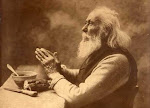
A Discourse On Meekness and Quietness of Spirit
(Abridged)
by Matthew Henry
Edited by R. P. Woitowitz Sr.


But let it be the hidden man of the heart, which consisteth in the incorruption of a meek and quiet spirit, which is before God a thing much set by. - 1 Peter 3:4

Meekness and quietness seem to import much the same thing, but the latter having something of metaphor in it, will illustrate the former, and therefore we shall speak of them distinctly.
 
We must be of a meek spirit. Meekness is easiness of spirit: not a sinful easiness to be debauched, as Ephraim's, who willingly walked after the commandment of the idolatrous princes; nor a simple easiness to be imposed upon and deceived, as Rehoboam's, who, when he was forty years old, is said to be young and tender-hearted; but a gracious easiness to be wrought upon by that which is good, as theirs whose heart of stone is taken away and to whom a heart of flesh is given. Meekness accommodates the soul to every occurrence, and so makes a man easy to himself and to all about him. The Latins call a meek man  mansuetuswhich alludes to the taming and reclaiming of creatures wild by nature, and bringing them to be tractable and familiar. (See James 3:7, 8). Man's corrupt nature has made him like the wild ass used to the wilderness, or the swift dromedary traversing her ways. (See Jeremiah 2:23, 24). But the grace of meekness, when that gets dominion in the soul, alters the temper of it, submits it to management; and now the wolf dwells with the lamb, and the leopard lies down with the kid, and a little child may lead them; for enmities are laid aside, and there is nothing to hurt or destroy. (See Isaiah 11:6, 9)

Meekness may be considered with respect both  to God  and  to our brethren;  it belongs to both the tables of the law, and attends upon the first great commandment, Thou shalt love the Lord thy God; as well as the second, which is like unto it, Thou shalt love thy neighbor as thyself; though its especial reference is to the latter. (See Matthew 22:36-40)

There is meekness towards God, and it is the easy and quiet submission of the soul to his whole will, according as he is pleased to make it known, whether by his word or by his providence.

It is the  silent submission of the soul to the word of Godthe understanding bowed to every divine truth, and the will to every divine precept; and both without murmuring or disputing. The word is then an "engrafted word," when it is received with meekness, that is, with a sincere willingness to be taught, and desire to learn. Meekness is a grace that cleaves the stock, and holds it open, that the word, as a shoot, may be grafted in; it breaks up the fallow ground, and makes it fit to receive the seed; captivates the high thoughts, and lays the soul like white paper under God's pen. When the dayspring takes hold of the ends of the earth, it is said to be turned as clay to the seal. Job 38:14. Meekness does, in like manner, dispose the soul to admit the rays of divine light, which before it rebelled against; it opens the heart, as Lydia's was opened, and sets us down with Mary at the feet of Christ, the learner's place and posture

The promise of teaching is made to the meek, because they are disposed to learn: "the meek he will teach his way." (See Psalm 86:11, Proverbs 9:9). The word of God is gospel indeed, "good tidings to the meek;" they will entertain it and bid it welcome. The "poor in spirit" are evangelized; and Wisdom's alms are given to those that with meekness wait daily at her gates, and like beggars wait at the posts of her doors. (See Proverbs 8:34). The language of this meekness is that of the child Samuel: "Speak, Lord, for thy servant heareth;" and that of Joshua, who, when he was in that high post of honor, giving command to Israel, and bidding defiance to all their enemies—his breast filled with great and bold thoughts—yet, upon the intimation of a message from heaven, thus submits himself to it: "What saith my Lord unto his servant?" and that of Paul—and it was the first breath of the new man—"Lord, what wilt thou have me to do?" and that of Cornelius: "And now we are all here present before God, to hear all things that are commanded thee of God;" and that of the good man I have read of, who, when he was going to hear the word, used to say, "Now let the word of the Lord come; and if I had six hundred necks, I would bow them all to the authority of it." To receive the word with meekness, is to be delivered into it as into a mould: this seems to be Paul's metaphor in Romans 6:17, that "form of doctrine which was delivered you." Meekness softens the wax, that it may receive the impression of the seal, whether it be for doctrine or reproof, for correction or instruction in righteousness. It opens the ear to discipline, silences objections, and suppresses the risings of the carnal mind against the word; consenting to the law that it is good and esteeming all the precepts concerning all things to be right, even when they give the greatest check to flesh and blood.

There is meekness towards our bretren, towards "all men." (See Titus 3:2). Meekness is especially conversant about the affection of anger: not wholly to extirpate and eradicate from the soul the holy indignation of which the Scriptures speak, for that were to quench a coal which sometimes there is occasion for, even at God's altar, and to blunt the edge even of the spiritual weapons with which we are to carry on our spiritual warfare; but its office is to direct and govern this affection, that we may be angry and not sin. (See Ephesians 4:26).
 
Meekness, in the school of the philosophers, is a virtue consisting in a mean between the extremes of rash excessive anger on the one hand, and a defect of anger on the other; a mean which Aristotle confesses it very hard exactly to gain.
 
Meekness, in the school of Christ, is one of the fruits of the Spirit. (Galatians 5:22, 23). It is a grace wrought by the Holy Ghost both as a sanctifier and as a comforter in the hearts of all true believers, teaching and enabling them at all times to keep their passions under the conduct and government of religion and right reason. I observe that it is wrought in the hearts of all true believers, because, though there are some whose natural temper is unhappily sour and harsh, yet wheresoever there is true grace, there is a disposition to strive against, and strength in some measure to conquer such a disposition. And though in this, as in other graces, an absolute sinless perfection cannot be expected in this present state, yet we are to labor after it, and press towards it.
 
More particularly, the work and office of meekness is to enable us prudently to govern our own anger when at any time we are provoked, and patiently to bear the anger of others, that it may not be a provocation to us. The former is its office especially in superiors, the latter in inferiors, and both in equals.
 
Meekness teaches us prudently  to govern our own anger  whenever any thing occurs that is provoking. As it is the work of temperance to moderate our natural appetites in things that are pleasing to sense, so it is the work of meekness to moderate our natural passions against those things that are displeasing to sense, and to guide and govern our resentments. Anger in the soul is like mettle in a horse, good if it be well managed. Now meekness is the bridle, as wisdom is the hand that gives law to it, puts it into the right way, and keeps it in an even, steady, and regular pace; reducing it when it turns aside, preserving it in a due decorum, and restraining it and giving it check when at any time it grows headstrong and outrageous, and threatens mischief to ourselves or others. It must thus be held in, like the horse and mule, with bit and bridle, lest it break the hedge, run over those that stand in its way, or throw the rider himself headlong. It is true of anger, as we say of fire, that it is a good servant but a "bad master;" it is good on the hearth, but bad in the hangings. Meekness keeps it in its place, sets banks to this sea, and says, Hitherto thou shalt come, and no further; here shall thy proud waves be stayed.

Friday, August 11, 2017

The General Epistle of James the Apostle Chapter 5:13-18

13 Is any among you afflicted? Let him pray. Is any merry? Let him sing.
14 Is any sick among you? Let him call for the Elders of the Church, and let them pray for him, and anoint him with oil in the Name of the Lord.
15 And the prayer of faith shall save the sick, and the Lord shall raise him up: and if he have committed sins, they shall be forgiven him.
16 Acknowledge your faults one to another, and pray one for another, that ye may be healed: for the prayer of a righteous man availeth much, if it be fervent.
17 Elijah was a man subject to like passions as we are, and he prayed earnestly that it might not rain, and it rained not on the earth for three years and six months.
18 And he prayed again: and the heaven gave rain, and the earth brought forth her fruit.

Cross references:

James 5:14: Mark 6:13
James 5:17: 1 Kings 17:1; 1 Kings 18:45; Luke 4:25

Prayer is Essential

Verses 13-18: In the above-mentioned verses we read the Apostle James using the word "pray, (or prayer)" a goodly number of times. It is also used quite frequently throughout all of God's word in the Bible. Paul, the Apostle always mentioned how he and those who were with him, continuously prayed for the saints in every epistle that he had written. Additionally, in these verses, James touches on the uses of prayer, in order that our Creator would take action.

Brethren, let us also and likewise always be in communication with our heavenly Father, for it is through this medium that we ask of His wisdom and seek His guidance in all things.

Wednesday, August 9, 2017


The General Epistle of James the Apostle Chapter 5:7-12

7 Be patient therefore, brethren, unto the coming of the Lord. Behold, the husbandman waiteth for the precious fruit of the earth, and hath long patience for it, until he receive the former, and the latter rain.
8 Be ye also patient therefore, and settle your hearts: for the coming of the Lord draweth near.
9 Grudge not one against another, brethren, lest ye be condemned: behold, the judge standeth before the door.
10 Take, my brethren, the Prophets for an example of suffering adversity, and of long patience, which have spoken in the name of the Lord.
11 Behold, we count them blessed which endure. Ye have heard of the patience of Job, and have known what end the Lord made. For the Lord is very pitiful and merciful.
12 But before all things, my brethren, swear not, neither by heaven, nor by earth, nor by any other oath: but let your yea, be yea, and your nay, nay, lest ye fall into condemnation.

Cross references:

James 5:12 : Matthew 5:34

Editor’s thoughts

Verses 7-1-8, 10-11: Note the words patience and established. Friends, let us be solid in our beliefs in Christ and His Gospel, that we might be well grounded in the faith, and in His word. As was written by we must run the race indeed to receive the crown of glory, but we must run with endurance (Read Hebrews 12:1).

Take notice of the Olympians that run those 5k or 10 k races. They run with the determination as established by patience. They do not sprint and fade out unable to finish. Nay, my brethren, they pace themselves waiting for the final lap to move forward and advance towards the end. Each one strives to do their best, as should we also strive.

Verse 9: Speak ill of none, and likewise speak words of life towards each other. Remember in an earlier chapter how the Apostle James compares the tongue to a fire that can easily burn out of control.

Verse 12: Make no promises that you may not be able to keep. In all things, just be simple and honest in your words, let yea be yea, and no be no. Also remember, as we read in a previous chapter, that we are but a vapor in the early morning, or a dew on the grass, that will soon be gone by the midday Sun. Therefore, friends, make no assurances for the next day.


Monday, August 7, 2017


The General Epistle of James the Apostle Chapter 4:14

14 And yet ye cannot tell what shall be tomorrow. For what is your life? It is even a vapor that appeareth for a little time, and afterward vanisheth away.

Related Scriptures:

Job 7:7
Psalm 37:2, 35-36
1 Peter 1:24

Editor’s thoughts:

Our time here is decided by our Creator, let us do good works to those in need. Help all those that seek aid from you to the best of your abilities. Be charitable and merciful. Exalt those that are due all honor. Likewise, give grace and pardon to all that wrong you. We do not know what the next day, nay even the next minute might be, but our last. Therefore strive to do our utmost to all peoples, and in all our efforts give God the glory, for it is through Him that we are able.

Whether there would be a morrow for them or not, whether they should live till tomorrow; and if they should, they knew not what a morrow would bring forth, or what things would happen, which might prevent their intended journey and success: no man can secure a day, an hour, a moment, and much less a year of continuance in this life; nor can he foresee what will befall him today or tomorrow; therefore it is great stupidity to determine on this, and the other, without the leave of God, in whom he lives, moves, and has his being; and by whose providence all events are governed and directed. (See Proverbs 27:1) What assurance can be had of the continuance of it [and] by what may it be expressed or to what may it be compared? [It is as written above], which rises out of the earth, or water, and expires almost as soon as it exists; at least, continues but a very short time, and is very weak and fleeting, and carried about here and there, and soon returns from whence it came: the allusion is to the breath of man, which is in his nostrils, and who is not to be accounted of, or depended on.” - John Gill - Theologian


Sunday, August 6, 2017


Trained by Grace
Commentary by Matthew Henry
Prefaced and Edited by R. P. Woitowitz Sr.

11 For the grace of God that brings salvation has appeared to all men, 12 teaching us that, denying ungodliness and worldly lusts, we should live soberly, righteously, and godly in the present age. - Titus 2:11-12

Preface
Brethren:

First, let us define the word grace. Webster's Dictionary (Ed. 1913), says thus; "The exercise of love, kindness, mercy, favor; disposition to benefit or serve another; favor bestowed or privilege conferred." Therefore we are to understand that grace is not only bestowed upon us from our Creator but likewise, we are to bestow it upon others.

This then moves us forward in our sermon today. For by our ability to understand the meaning and usage of grace, we are taught how salvation is the result of mercy and grace. We, as is written in verse twelve, are to henceforth, deny all things that would be of the former, and worldly nature of our beings. Thus being an example, an agent if you will, of all godliness, and righteousness in the eyes of all men.

Also note, that the Gospel of grace is made available to all people. This is to say, that one can either accept it, or reject it, but not one cannot say, that it is unknown to them. If I might be allowed to quote a lyric from the song “People Get Ready”; “there’s no hiding place under the Kingdom’s throne” Therefore, friends and brethren, be ready, be sober, and be vigilant.
R. P. Woitowitz Sr. - Humble disciple in the service of our Lord; Christ Jesus

This gospel grace brings salvation (reveals and offers it to sinners and ensures it to believers)salvation from sin and wrath, from death and hell. Hence it is called the word of life; it brings to faith, and so to life, the life of holiness now and of happiness hereafter. The law is the ministration of death, but the gospel the ministration of life and peace. This, therefore, must be received as salvation (its rules minded, its commands obeyed), that the end of it may be obtained, the salvation of the soul.

It hath appeared, or shone out more clearly and illustriously than ever before. The old dispensation was comparatively dark and shadowy; this is a clear and shining light; and, as it is now more bright, so more diffused and extensive also. For, It hath appeared to all men; not to the Jews only, (See Romans 1:15-17; 2:8-10), as the glory of God appeared at mount Sinai to that particular people, and out of the view of all others; but gospel grace is open to all, and all are invited to come and partake of the benefit of it. The publication of it is free and general: Disciple all nations: Preach the gospel to every creature. The pale is broken down; there is no such enclosure now as formerly. The doctrine of grace and salvation by the gospel is for all ranks and conditions of men (slaves and servants, as well as masters), therefore engaging and encouraging all to receive and believe it, and walk suitably to it, adorning it in all things. This gospel revelation is to teach, and not by way of information and instruction only, as a schoolmaster does his scholars, but by way of precept and command, as a sovereign who gives laws to his subjects. It directs what to shun and what to follow, what to avoid and what to do. The gospel is not for speculation only or chiefly, but for practice and right ordering of life.


[It] teaches us [first of all], to abandon sin: Denying ungodliness and worldly lusts; to renounce and have no more to do with these, as we have had: Put off, concerning the former conversation, the old man which is corrupt; that is, the whole body of sins, here distributed into ungodliness and worldly lusts. "Put away ungodliness and irreligion, all unbelief, neglect or disesteem of the divine Being, not loving, nor fearing, nor trusting in him, nor obeying him as we should, neglecting his ordinances, slighting his worship, profaning his name or day. Thus deny ungodliness (hate and put it away); and worldly lusts, all corrupt and vicious desires and affections that prevail in worldly men, and carry out to worldly things the lust of the flesh also, and of the eye, and the pride of life, all sensuality and filthiness, covetous desires and ambition, seeking and valuing more the praise of men than of God; put away all these.’’ An earthly sensual conversation suits not a heavenly calling. Those that are Christ’s have crucified the flesh with the affections and lusts. They have done it by covenant-engagement and promise, and have initially and prevailingly done it in act; they are going on in the work, cleansing themselves more and more from all filthiness of flesh and spirit. Thus the gospel first unteaches that which is evil, to abandon sin.

[Secondly, we are], to make conscience of that which is good (See Philippians 4:8). To live soberly, righteously, and godly, etc. Religion is not made up of negatives only; there must be doing good as well as eschewing evil, (See James 2:17-18). In these conjunctly is sincerity proved and the gospel adorned. We should live soberly with respect to ourselves, in the due government of our appetites and passions, keeping the limits of moderation and temperance, avoiding all inordinate excesses; and righteously towards all men, rendering to all their due, and injuring none, but rather doing good to others, according to our ability and their need: this seems a part of justice and righteousness, for we are not born for ourselves alone, and therefore may not live to ourselves only.” - Matthew Henry - Theologian


Friday, August 4, 2017


The General Epistle of James Chapter 4:11-12

11 Speak not evil one of another, brethren. He that speaketh evil of his brother, or he that condemneth his brother, speaketh evil of the Law, and condemneth the Law: and if thou condemnest the Law, thou art not an observer of the Law, but a judge.
12 There is one Lawgiver, which is able to save, and to destroy. Who art thou that judgest another man?

Cross references:

James 4:12 : Romans 14:4

Editor’s thoughts:

I must admit this is a difficult thing to do in life. We cannot judge, but we can identify evil and unrighteousness. There is a very thin line between the two. I would add that we are not to repay evil for evil, (which is also difficult to do, given we live in a “get even” society), but, let the Lord repay for as is written: “Vengeance is mine saith the Lord” (See Deuteronomy 32:35 , Psalm 54:5, Romans 12:17, 19)

Our lips must be guided by the law of kindness, as well as truth and justice. Speak not evil one of another, [First], because you are brethren. The compellation, as used by the apostle here, carries an argument along with it. Since Christians are brethren, they should not defile nor defame one another. It is required of us that we be tender of the good name of our brethren; where we cannot speak well, we had better say nothing than speak evil; we must not take pleasure in making known the faults of others, divulging things that are secret, merely to expose them, nor in making more of their known faults than really they deserve, and, least of all, in making false stories, and spreading things concerning them of which they are altogether innocent. What is this but to raise the hatred and encourage the persecutions of the world, against those who are engaged in the same interests with ourselves, and therefore with whom we ourselves must stand or fall? Consider, you are brethren

[Second], because this is to judge the law: He that speaketh evil of his brother, and judgeth his brother, speaketh evil of the law, and judgeth the law. The law of Moses says, Thou shalt not go up and down as a tale-bearer among thy people, (See Leviticus 19:16 ). The law of Christ is, Judge not, that you be not judged, (See Matthew 7:1). The sum and substance of both is that men should love one another. A detracting tongue therefore condemns the law of God, and the commandment of Christ, when it is defaming its neighbor. To break God’s commandments is in effect to speak evil of them, and to judge them, as if they were too strict, and laid too great a restraint upon us. The Christians to whom James wrote were apt to speak very hard things of one another, because of their differences about indifferent things , such as the observance of meats and days, [and other matters of contention].

[Third], God is still to be acknowledged as the supreme Lawgiver, who only can give law to the conscience, and who alone is to be absolutely obeyed. His right to enact laws is incontestable, because he has such a power to enforce them. He is able to save, and to destroy, so as no other can. He has power fully to reward the observance of his laws, and to punish all disobedience; he can save the soul, and make it happy for ever, or he can, after he has killed, cast into hell; and therefore should be feared and obeyed as the great Lawgiver, and all judgment should be committed to him. Since there is one Lawgiver, we may infer that it is not for any man or company of men in the world to pretend to give laws immediately to bind conscience; for that is God’s prerogative, which must not be invaded. As the apostle had before warned against being many masters, so here he cautions against being many judges. Let us not prescribe to our brethren, let us not censure and condemn them; it is sufficient that we have the law of God, which is a rule to us all; and therefore we should not set up other rules. Let us not presume to set up our own particular notions and opinions as a rule to all about us; for there is one Lawgiver." 
Matthew Henry - Theologian

Thursday, August 3, 2017


The General Epistle of James the Apostle Chapter 4:7-10

7 Submit yourselves to God: resist the devil, and he will flee from you.
8 Draw near to God, and he will draw near to you. Cleanse your hands, ye sinners, and purge your hearts, ye double minded.
9 Suffer afflictions, and sorrow ye, and weep: let your laughter be turned into mourning, and your joy into heaviness.
10 Cast down yourselves before the Lord, and he will lift you up.

Cross references:
James 4:7 : Ephesians 4:27
James 4:10 : 1 Peter 5:6

Editor’s thoughts:

Verses 7-10
These can be summed up by noting that humility cures worldliness.
Note the key words and phrases:
Submit, resist, (the Devil who promotes self-pride), draw near, cleanse, purify, and most importantly humble yourselves.

This is to say that by submitting and humbling ourselves in all things, (especially in prayer - Read Luke 18:1), we can change our thinking and put on the mind of Christ.

"Resist the devil. Under his banner pride and envy are enlisted: 'resist' (stand against) these his temptations. Faith, prayers, and heavenly wisdom are the weapons of resistance. 'Submit,' as a good soldier puts himself in subjection to his captain. He will draw nigh - propitious. Cleanse your hands - the outward instruments of action. None but the clean-handed can ascend into the hill of the Lord (justified through Christ, who alone, being perfectly so, 'ascended' there. Purify your hearts, make chaste of spiritual adultery from your hearts, the inward source of all impurity. [Humble yourself], In the sight of the Lord - as continually in the presence of Him who alone is to be exalted: the truest incentive to humility. The tree, to grow upwards, must strike its roots downward; so man, to be exalted, must have his mind deep-rooted in humility, namely, in His providential dealings: a distinct thought. Lift you up - partly in this world, fully in that to come." - Source; Commentary Critical and Explanatory on the Whole Bible - Unabridged