Sunday, November 16, 2014


Sunday Sermon
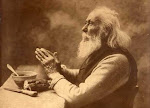
Matthew Henry Theologian 1662-1714

Joshua 5:13-15

13 And when Joshua was by Jericho, he lift up his eyes and looked: and behold, there stood a man against him, having a sword drawn in his hand: and Joshua went unto him, and said unto him, Art thou on our side, or on our adversaries? 14 And he said, Nay, but as a captain of the host of the Lord am I now come: then Joshua fell on his face to the earth, and did worship, and said unto him, What saith the Lord unto his servant? 15 And the captain of the Lord’s host said unto Joshua, Loose thy shoe of thy foot: for the place whereon thou standest, is holy: and Joshua did so.

 We have hitherto found God often speaking to Joshua, but we read not till now of any appearance of God’s glory to him; now that his difficulties increased his encouragements were increased in proportion. Observe,I. The time when he was favoured with this vision. It was immediately after he had performed the great solemnities of circumcision and the passover; then God made himself known to him. Note, We may then expect the discoveries of the divine grace when we are found in the way of our duty and are diligent and sincere in our attendance on holy ordinances.II. The place where he had this vision. It was by Jericho; in Jericho, so the word is; in it by faith and hope, though as yet he had not begun to lay siege to it; in it in thought and expectation; or in the fields of Jericho, hard by the city. There, it should seem, he was all alone, fearless of danger, because sure of the divine protection. There he was (some think) meditating and praying; and to those who are so employed God often graciously manifests himself. Or perhaps there he was to take a view of the city, to observe its fortifications, and contrive how to attack it; and perhaps he was at a loss within himself how to make his approaches, when God came and directed him. Note, God will help those that help themselves. Vigilantibus non dormientibus succurrit lex—The law succours those who watch, not those who sleep. Joshua was in his post as a general, when God came and made himself known as Generalissimo.III. The appearance itself. Joshua, as is usual with those that are full of thought and care, was looking downwards, his eyes fixed on the ground, when of a sudden he was surprised with the appearance of a man who stood before him at some little distance, which obliged him to lift up his eyes, and gave a diversion to his musings, (verse 13) He appeared to him as a man, but a considerable man, and one fit to be taken notice of. Now, 1. We have reason to think that this man was the Son of God, the eternal Word, who, before he assumed the human nature for a perpetuity, frequently appeared in a human shape. So bishop Patrick thinks, consonant to the judgment of the fathers. Joshua gave him divine honours, and he received them, which a created angel would not have done, and he is called Jehovah, (Chronicles 6:2 ). He here appeared as a soldier, with his sword drawn in his hand. To Abraham in his tent he appeared as a traveller; to Joshua in the field as a man of war. Christ will be to his people what their faith expects and desires. Christ had his sword drawn, which served, (1.) To justify the war Joshua was engaging in, and to show him that it was of God, who gave him commission to kill and slay. If the sovereign draw the sword, this proclaims war, and authorizes the subject to do so too. The sword is then well drawn when Christ draws it, and gives the banner to those that fear him, to be displayed because of the truth, (Psalm 60:4) (2.) To encourage him to carry it on with vigour; for Christ’s sword drawn in his hand denotes how ready he is for the defence and salvation of his people, who through him shall do valiantly. His sword turns every way.IV. The bold question with which Joshua accosted him; he did not send a servant, but stepped up to him himself, and asked, Art thou for us or for our adversaries? which intimates his readiness to entertain him if he were for them, and to fight him if he were against them. This shows, 1. His great courage and resolution. He was not ruffled by the suddenness of the appearance, nor daunted with the majesty and bravery which no doubt appeared in the countenance of the person he saw; but, with a presence of mind that became so great a general, put this fair question to him. God had bidden Joshua be courageous, and by this it appears that he was so; for what God by his word requires of his people he does by his grace work in them. 2. His great concern for the people and their cause; so heartily has he embarked in the interests of Israel that none shall stand by him with the face of a man but he will know whether he be a friend or a foe. It should seem, he suspected him for an enemy, a Goliath that had come to defy the armies of the living God, and to give him a challenge. Thus apt are we to look upon that as against us which is most for us. The question plainly implies that the cause between the Israelites and the Canaanites, between Christ and Beelzebub, will not admit of a neutrality. He that is not with us is against us. V. The account he gave of himself, (verse 14) "Nay, not for your adversaries, you may be sure, but as captain of the host of the Lord have I now come, not only for you as a friend, but over you as commander in chief.’’ Here were now, as of old (Genesis 32:2 ), Mahanaim, two hosts, a host of Israelites ready to engage the Canaanites and a host of angels to protect them therein, and he, as captain of both, conducts the host of Israel and commands the host of angels to their assistance. Perhaps in allusion to this Christ is called the captain of our salvation (Hebrews 2:10 ), and a leader and commander to the people, (Isaiah 55:4). Those cannot but be victorious that have such a captain. He now came as captain to review the troops, to animate them, and to give the necessary orders for the besieging of Jericho.VI. The great respect Joshua paid him when he understood who he was; it is probable that he perceived, not only by what he said but by some other sensible indications, that he was a divine person, and not a man. 1. Joshua paid homage to him: He fell on his face to the earth and did worship. Joshua was himself general of the forces of Israel, and yet he was far from looking with jealousy upon this stranger, who produced a commission as captain of the Lord’s host above him; he did not offer to dispute his claims, but cheerfully submitted to him as his commander. It will become the greatest of men to be humble and reverent in their addresses to God. 2. He begged to receive commands and directions from him: What saith my Lord unto his servant? His former question was not more bold and soldier-like than this was pious and saint-like; nor was it any disparagement to the greatness of Joshua’s spirit thus to humble himself when he had to do with God: even crowned heads cannot bow too low before the throne of the Lord Jesus, who is King of kings, (Psalm 2:10-11, Psalm 72:10-11; Revelations 19:16 ). Observe, (1.) The relation he owns between himself and Christ, that Christ was his Lord and himself his servant and under his command, Christ his Captain and himself a soldier under him, to do as he is bidden, (Matthew 8:9). Note, The foundation of all acceptable obedience is laid in a sincere dedication of ourselves, as servants to Jesus Christ as our Lord, (Psalm 16:2 ). (2.) The enquiry he makes pursuant to this relation: What saith my Lord? which implies an earnest desire to know the will of Christ, and a cheerful readiness and resolution to do it. Joshua owns himself an inferior officer, and stands to receive orders. This temper of mind shows him fit for the post he was in; for those know best how to command that know how to obey.VII. The further expressions of reverence which this divine captain required from Joshua (v. 15): Loose thy shoe from off thy foot, in token of reverence and respect (which with us are signified by uncovering the head), and as an acknowledgment of a divine presence, which, while it continued there, did in a manner sanctify the place and dignify it. We are accustomed to say of a person for whom we have a great affection that we love the very ground he treads upon; thus Joshua must show his reverence for this divine person, he must not tread the ground he stood on with his dirty shoes, (Ecclesiastes  5:1). Outward expressions of inward reverence, and a religious awe of God, well become us, and are required of us, whenever we approach to him in solemn ordinances. Bishop Patrick well observes here that the very same orders that God gave to Moses at the bush, when he was sending him to bring Israel out of Egypt (Exodus 3:5 ), he here gives to Joshua, for the confirming of his faith in the promise he had lately given him, that as he had been with Moses so he would be with him, (Chronicles 1:5). Had Moses such a presence of God with him as, when it became sensible, sanctified the ground? So had Joshua.And (lastly) Hereby he prepares him to receive the instructions he was about to give him concerning the siege of Jericho, which this captain of the Lord’s host had now come to give Israel possession of.

Saturday, November 15, 2014


Joshua 4:20-24
Geneva Bible Translation Ed. 1599

Study notes from Matthew Henry’s Bible Commentary

20 Also the twelve stones, which they took out of Jordan, did Joshua pitch in Gilgal. 21 And he spake unto the children of Israel, saying, When your children shall ask their fathers in time to come, and say, What mean these stones? 22 Then ye shall show your children, and say, Israel came over this Jordan on dry land: 23 For the Lord your God dried up the waters of Jordan before you, until ye were gone over as the Lord your God did the red Sea, which he dried up before us, till we were gone over, 24 That all the people of the world may know that the hand of the Lord is mighty, that ye might fear the Lord your God continually.

The twelve stones which were laid down in Gilgal (verse 8) are here set up either one upon another, yet so as that they might be distinctly counted, or one by another in rows; for after they were fixed they are not call a heap of stones, but these stones. I. It is here taken for granted that posterity would enquire into the meaning of them, supposing them intended for a memorial: Your children shall ask their fathers (for who else should they ask?) What mean these stones? Notes, Those that will be wise when they are old must be inquisitive when they are young. Our Lord Jesus, though he had in himself the fulness of knowledge, has by his example taught children and young people to hear and ask questions, (Luke 2:46) Perhaps when John was baptizing in Jordan at Bethabara (the house of passage, where the people passed over) he pointed at these very stones, while saying (Matthew 3:9 ) God is able of these stones (which were at first set up by the twelve tribes) to raise up children unto Abraham. The stones being the memorial of the miracle, the children’s question gave occasion for the improvement of it; but our Saviour says (Luke 19:40 ), If the children should hold their peace, the stones would immediately cry out; for one way or other the Lord will be glorified in his works of wonder.II. The parents are here directed what answer to give to this enquiry (verse 22): "You shall let your children know that which you have yourselves learned from the written word and from your fathers.’’ Note, It is the duty of parents to acquaint their children betimes with the word and works of God, that they may be trained up in the way they should go.1. They must let their children know that Jordan was driven back before Israel, who went through it upon dry land, and that this was the very place where they passed over. They saw how deep and strong a stream Jordan now was, but the divine power put a stop to it, even when it overflowed all its banks—"and this for you, that live so long after.’’ Note, God’s mercies to our ancestors were mercies to us; and we should take all occasions to revive the remembrance of the great things God did for our fathers in the days of old. The place thus marked would be a memorandum to them: Israel came over this Jordan. A local memory would be of use to them, and the sight of the place remind them of that which was done there; and not only the inhabitants of that country, but strangers and travelers, would look upon these stones and receive instruction. Many, upon the sight of the stones, would go to their Bibles, and there read the history of this wondrous work; and some perhaps, upon reading the history, though living at a distance, would have the curiosity to go and see the stones.2. They must take that occasion to tell their children of the drying up of the Red Sea forty years before: As the Lord your God did to the Red Sea. Note. (1.) It greatly magnifies later mercies to compare them with former mercies, for, by making the comparison, it appears that God is the same yesterday, to-day, and for ever. (2.) Later mercies should bring to remembrance former mercies, and revive our thankfulness for them.3. They must put them in the way of making a good use of these works of wonder, the knowledge whereof was thus carefully transmitted to them, (verse 24)  1. The power of God was hereby magnified. All the world was or might be convinced that the hand of the Lord is mighty, that nothing is too hard for God to do; nor can any power, no, not that of nature itself, obstruct what God will effect. The deliverances of God’s people are instructions to all people, and fair warnings not to contend with Omnipotence. 2. The people of God were engaged and encouraged to persevere in his service "That you might fear the Lord your God, and consequently do your duty to him, and this for ever,’’ or all days (margin), "every day, all the days of your lives, and your seed throughout your generations.’’ The remembrance of this wonderful work should effectually restrain them from the worship of other Gods, and constrain them to abide and abound in the service of their own God. Note, In all the instructions and informations parents give their children, they should have this chiefly in their eye, to teach and engage them to fear God for ever. Serious Godliness is the best learning.

Friday, November 14, 2014


Joshua 4:10-19 
 Geneva Bible Translation Ed. 1599

10 So the Priests, which bare the Ark, stood in the midst of Jordan, until everything was finished that the Lord had commanded Joshua to say unto the people, according to all that Moses charged Joshua: then the people hasted and went over. 11 When all the people were clean passed over, the Ark of the Lord went over also, and the Priests before the people. 12 And the sons of Reuben, and the sons of Gad, and half the tribe of Manasseh went over before the children of Israel armed, as Moses had charged them. 13 Even forty thousand prepared for war, went before the Lord unto battle, into the plain of Jericho. 14 That day the Lord magnified Joshua in the sight of all Israel, and they feared him, as they feared Moses all the days of his life. 15 And the Lord spake unto Joshua, saying, 16 Command the Priests that bear the Ark of the testimony, to come up out of Jordan. 17 Joshua therefore commanded the Priests, saying, Come ye up out of Jordan. 18 And when the Priests that bare the Ark of the Covenant of the Lord, were come up out of the midst of Jordan, and as soon as the soles of the Priests’ feet were set on the dry land, the waters of Jordan returned unto their place, and flowed over all the banks thereof, as they did before. 19 So the  people came up out of Jordan the tenth day of the first month, and pitched in Gilgal, in the East side of Jericho.

The inspired historian seems to be so well pleased with his subject here that he is loth to quit it, and is therefore very particular in his narrative, especially in observing how closely Joshua pursued the orders God gave him, and that he did nothing without divine direction, finishing all that the Lord had commanded him (verse 10), which is also said to be what Moses commanded. We read not of any particular commands that Moses gave to Joshua about this matter: the thing was altogether new to him. It must therefore be understood of the general instructions Moses had given him to follow the divine direction, to deliver that to the people which he received of the Lord, and to take all occasions to remind them of their duty to God, as the best return for his favours to them. This which Moses, who was now dead and gone, had said to him, he had in mind at this time, and did accordingly. It is well for us to have the good instructions that have been given us ready to us when we have occasion for them. I. The people hasted and passed over, (verse 10) Some understand this of the twelve men that carried the stones, but it seems rather to be meant of the body of the people; for, though an account was given of their passing over (verse 1), yet here it is repeated for the sake of this circumstance, which was to be added, that they passed over in haste, either because Joshua by their officers ordered them to make haste, for it was to be but one day’s work and they must not leave a hoof behind, or perhaps it was their own inclination that hastened them. 1. Some hasted because they were not able to trust God. They were afraid the waters should return upon them, being conscious of guilt, and diffident of the divine power and goodness. 2. Others because they were not willing to tempt God to continue the miracle longer than needs must, nor would they put the patience of the priests that bore the ark too much to the stretch by unnecessary delay. 3. Others because they were eager to be in Canaan, and would thus show how much they longed after that pleasant land. 4. Those that considered least, yet hasted because others did. He that believeth doth not make haste to anticipate God’s counsels, but he makes haste to attend them, Isaiah. 28:16 .II. The two tribes and a half led the van, (verse 12- 13) So they had promised when they had their lot given them on that side Jordan, (Numbers 32:27)And Joshua had lately reminded them of their promise, (Chronicles 1:12-15) It was fit that those who had the first settlement should be the first in the encounter of difficulties, the rather because they had not the incumbrance of families with them as the other tribes had, and they were all chose men, and fit for service, ready armed. It was a good providence that they had so strong a body to lead them on, and would be an encouragement to the rest. And the two tribes had no reason to complain: the post of danger is the post of honour.III. When all the people had got clear to the other side, the priests with the ark came up out of Jordan. This, one would think, should have been done of course; their own reason would tell them that now there was no more occasion for them, and yet they did not stir a step till Joshua ordered them to move, and Joshua did not order them out of Jordan till God directed him to do so, (verses 15-17) So observant were they of Joshua, and he of God, which was their praise, as it was their happiness to be under such good direction. How low a condition soever God may at any time bring his priests or people to, let them patiently wait, till by his providence he shall call them up out of it, as the priests here were called to come up out of Jordan, and let them not be weary of waiting, while they have the tokens of God’s presence with them, even the ark of the covenant, in the depth of their adversity.IV. As soon as ever the priests and the ark had come up out of Jordan, the waters of the river, which had stood on a heap, gradually flowed down according to their nature and usual course, and soon filled the channel again, (verse 18) This makes it yet more evident that the stop which had now been given to the river was not from any secret natural cause, but purely from the power of God’s presence, and for the sake of his Israel; for when Israel’s turn was served, and the token of God’s presence was removed, immediately the water went forward again; so that if it be asked, What ailed thee, O Jordan! that thou wast driven back? It must be answered, It was purely in obedience to the God of Israel, and in kindness to the Israel of God. There is therefore none like unto the God of Jeshurun; (Yshuruwn yesh-oo-roon', upright; Jeshurun, a symbol. name for Israel)  happy also art thou, O Israel! who is like unto thee, O people? Some observe here, by way of allusion, that when the ark, and the priests that bore it, are removed from any place, the flood-gates are drawn up, the defence has departed, and an inundation of judgments is to be expected shortly. Those that are unchurched will soon be undone. The glory has departed if the ark is taken.V. Notice is taken of the honour put upon Joshua by all this (verse 14): On that day the Lord magnified Joshua, both by the fellowship he admitted him to with himself, speaking to him upon all occasions and being ready to be consulted by him, and by the authority he confirmed him in over both priests and people. Those that honour God he will honour, and when he will magnify a man, as he had said he would magnify Joshua (Chronicles 3:7 ), he will do it effectually. Yet it was not for Joshua’s sake only that he was thus magnified, but to put him in a capacity of doing so much the more service to Israel, for hereupon they feared him as they feared Moses. See here what is the best and surest way to command the respect of inferiors, and to gain their reverence and observance, not by blustering and threatening, and carrying it with a high hand, but by holiness and love, and all possible indications of a constant regard to their welfare, and to God’s will and honour. Those are feared in the best manner, and to the best purpose, who make it to appear that God is with them, and that they set him before them. Those that are sanctified are truly magnified, and are worthy of double honour. Favourites of heaven should be looked on with awe.VI. An account is kept of the time of this great event (verse 19): it was on the tenth day of the first month, just forty years since they came out of Egypt, wanting five days. God had said in his wrath that they should wander forty years in the wilderness, but, to make up that forty, we must take in the first year, which was then past, and had been a year of triumph in their deliverance out of Egypt, and this last, which had been a year of triumph likewise on the other side Jordan, so that all the forty were not years of sorrow; and at last he brought them into Canaan five days before the forty years were ended, to show how little pleasure God takes in punishing, how swift he is to show mercy, and that for the elects’ sake the days of trouble are shortened, (Matthew 24:22) God ordered it so that they should enter Canaan four days before the annual solemnity of the Passover, and on the very day when the preparation for it was to begin (Exodus 12:3), because he would have their entrance into Canaan graced and sanctified with that religious feast, and would have them then to be reminded of their deliverance out of Egypt, that, comparing them together, God might be glorified as the Alpha and Omega of their bliss.

Thursday, November 13, 2014


Be Never so Busy as to Exclude God

Imagine how busy Joshua and all the men of war were while they were passing over Jordan, when besides their own marching into an enemy’s country, and in the face of the enemy, which could not but occasion them many thoughts of fear, they had their wives, and children, and families, their cattle, and tents, and all their effects, bag and baggage, to convey by this strange and untrodden path, which we must suppose either very muddy or very stony, troublesome to the weak and frightful to the timorous, the descent to the bottom of the river and the ascent out of it steep, so that every man must needs have his head full of care and his hands full of business, and Joshua more than any of them. And yet, in the midst of all his hurry, care must be taken to perpetuate the memorial of this wonderous work of God, and this care might not be adjourned to a time of greater leisure. Note, how much soever we have to do of business for ourselves and our families, we must not neglect nor omit what we have to do for the glory of God and the serving of his honour, for that is our best business.

Tuesday, November 11, 2014


A Meditation for Today

[When] they [the children of Israel] came to Jordan and lodged there, (Joshua 3:1) Though they were not yet told how they should pass the river, and were unprovided for the passing of it in any ordinary way, yet they went forward in faith, having been told (chronicles 1:11 ) that they should pass it. We must go on in the way of our duty though we foresee difficulties, trusting God to help us through them when we come to them. Let us proceed as far as we can, and depend on divine sufficiency for that which we find ourselves not sufficient for.
Matthew Henry - Theologian - 1662-1714

Monday, November 10, 2014


The Book of Joshua 1:7-9 
(Geneva Bible Translation Ed. 1599)

7 Only be thou strong, and of a most valiant courage, that thou mayest observe and do according to all the Law which Moses my servant hath commanded thee: thou shalt not turn away from it to the right hand, nor to the left, that thou mayest prosper whithersoever thou goest. 8 Let not this book of the Law depart out of thy mouth, but meditate therein day and night, that thou mayest observe and do according to all that is written therein: for then shalt thou make thy way prosperous, and then shalt thou have good success. 9 Have not I commanded thee, saying, Be strong and of a good courage, fear not, nor be discouraged? for I the Lord thy God will be with thee whithersoever thou goest. 

Related Scripture - Psalm 119:16, 48, 50, 57, 74, 160; Isaiah 51:6, 59:21; John 17:14, 17; James 1:21-22

Sunday, November 9, 2014


The Book of Deuteronomy 33:3, 29 
(Geneva Bible Translation Ed. 1599)

3 Though he love the people, yet all thy Saints are in thine hands: and they are humbled at thy feet, to receive thy words
29 Blessed art thou, O Israel: who is like unto thee, O people saved by the Lord, the shield of thine help, and which is the sword of thy glory? therefore thine enemies shall be in subjection to thee, and thou shalt tread upon their high places.


33:3 - The people - The tribes of Israel. The sense is, this law, though delivered with fire and smoke and thunder, which might seem to portend nothing but hatred and terror, yet in truth was given to Israel, in great love, as being the great mean of their temporal and eternal salvation. Yea, he, embraced the people, and laid them in his bosom! so the word signifies, which speaks not only the dearest love, but the most tender and careful protection. All God's saints or holy ones, that is, his people, were in thy hand, that is, under God's care to protect, direct and govern them. These words are spoken to God: the change of persons, his and thy, is most frequent in the Hebrew tongue. This clause may farther note God's kindness to Israel, in upholding them when the fiery law was delivered, which was done with so much terror that not only the people were ready to sink under it, but even Moses did exceedingly fear and quake. But God sustained both Moses and the people, in or by his hand, whereby he in a manner covered them that no harm might come to them. At thy feet - Like scholars to receive instructions. He alludes to the place where the people waited when the law was delivered, which was at the foot of the mount. Every one - Of the people will receive or submit to thy instructions and commands. This may respect either, the peoples promise when they heard the law, that they would hear and do all that was commanded. Or, their duty to do so.

33:29 - The shield of they help - By whom thou are sufficiently guarded against all assailants; and the sword of thy excellency - Or, thy most excellent sword, that is, thy strength and the author of all thy past or approaching victories. Those in whose hearts is the excellency of holiness, have God himself for their shield and sword. They are defended by the whole armour of God: His word is their sword, and faith their shield.And thine enemies shall be found liars unto thee - Who said they would destroy thee: or at least, that they would never submit: and thou shalt tread upon their high places - Their strong holds, palaces and temples.Thus shall the God of peace tread Satan under the feet of all believers, and that shortly.

Notes on verses three and twenty nine by John Wesley